Introduction
You've found the perfect home. The offer is accepted. The excitement is real.
But before you get the keys, there's a document that quietly holds the power to make or break your entire transaction — the preliminary title report.
Most homebuyers receive this document, glance at it briefly, and assume their agent or lender is handling it. Some never look at it at all.
That's a mistake that can cost thousands of dollars — and in some cases, the property itself.
At GravityOne Solution, title examination is one of our most critical services. We believe every homebuyer deserves to understand exactly what's in their title report, what it means, and how it protects them. In this guide, we break it all down — simply, clearly, and completely.
What Is a Title Examination?
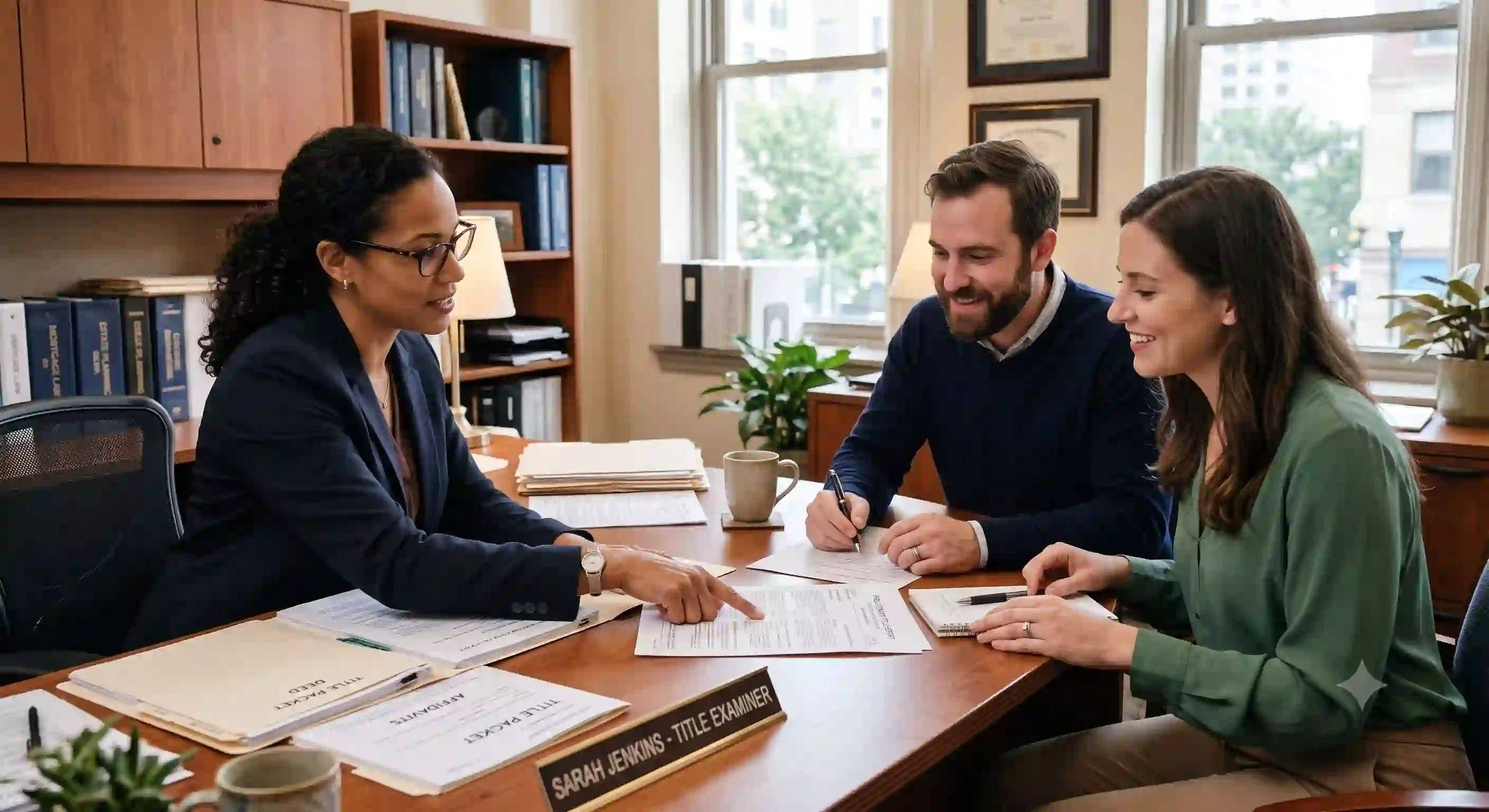
A title examination is the professional review and analysis of all documents uncovered during a title search. Once our team has pulled every public record tied to a property — deeds, mortgages, judgments, liens, tax records — a trained title examiner carefully studies those records to identify any issues that could affect ownership.
The result of this process is the preliminary title report — a structured document that tells everyone involved in the transaction exactly where the property stands legally before closing.
Think of it this way: the title search collects all the evidence, and the title examination is the expert analysis of what that evidence means.
At GravityOne Solution, our job during this process is simple but powerful — we are in the business of risk elimination.
The Preliminary Title Report — What's Actually Inside
The preliminary title report has three critical sections. Understanding each one is essential — especially if you're buying a property with cash, where there's no lender watching over the process for you.
Vesting — Are You Talking to the Right People?
The first section of every preliminary title report is vesting — and it's more important than most buyers realize.
Vesting confirms who the legal owner of the property actually is. It answers the fundamental question:
"Does the person selling this property actually have the legal right to sell it?"
Our title examiners verify that the seller's name on the purchase agreement matches exactly with the recorded ownership on file with the county. If it doesn't — if there's a discrepancy in a name, a missing co-owner, or an ownership transfer that wasn't properly documented — that issue must be resolved before closing can proceed.
This protects you from the nightmare scenario of purchasing a property from someone who doesn't fully or legally own it.
What GravityOne does here: We trace the complete ownership record and flag any vesting issues immediately — giving agents and buyers the time they need to gather the right documentation and resolve discrepancies without delaying the closing.
Exceptions — What Will NOT Be Covered by Title Insurance
The second — and often most misunderstood — section of the preliminary title report is the exceptions.
Exceptions are items that will be excluded from coverage under the title insurance policy issued at closing. In other words, these are the risks the title insurance company is not willing to insure against — because they already exist on the property.
Exceptions commonly include:
Easements — Rights that allow others to use part of the property (utility companies, neighboring properties)
Covenants, Conditions & Restrictions (CC&Rs) — Rules that govern how the property can be used
Existing liens — Mortgages, tax liens, judgment liens, or mechanic's liens attached to the property
Encroachments — Structures that cross property boundary lines
Lenders are exceptionally thorough when reviewing exceptions because their financial interest is tied to the property. They will not fund a loan until every exception that threatens their position is addressed.
But here's the critical point for cash buyers:
If you're purchasing a property without a lender, there is no institution watching these exceptions on your behalf. You become your own underwriter. You must understand every exception in this section — what it means, whether it's acceptable, and whether it needs to be resolved before you take ownership.
This is exactly where the expertise of a team like GravityOne Solution becomes invaluable.
What GravityOne does here: We review every exception in detail and clearly communicate to the agents involved which items are standard and which need to be addressed before closing. Nothing gets buried in legal language. We break it down so everyone understands what they're looking at.
Requirements — What Needs to Happen Before Closing
The third section of the preliminary title report is the requirements — and this is where the action items live.
Requirements are the specific conditions that must be met before the title company can issue a clean title policy and the transaction can close. They represent the outstanding documentation or actions needed to resolve any issues identified in the examination.
Common requirements include:
Statement of Information — A form completed by the buyer and seller to distinguish them from others with similar names in public records
Corporate documents — If a buyer or seller is an LLC, trust, or corporation, proper authorization documents must be provided
Payoff demands — Existing loans or liens that must be paid and cleared before or at closing
Court orders or probate documents — Required when a property is being sold through an estate or legal proceeding
HOA documentation — Confirmation of dues, transfer fees, and any outstanding balances
What GravityOne does here: We identify every requirement early in the process and communicate them clearly to all parties — agents, buyers, sellers, and lenders. The earlier requirements are identified and addressed, the smoother the closing. Last-minute surprises on closing day are almost always the result of requirements that weren't caught or communicated in time.
Why Title Examination Matters Most for Cash Buyers
If there's one group of homebuyers who absolutely cannot overlook title examination, it's cash buyers.
When a lender is involved in a transaction, they employ their own underwriting team to scrutinize the title report. They won't release funds until every threatening exception is resolved and every requirement is met. That lender oversight is essentially a second layer of protection for the buyer.
Cash buyers have no such safety net.
If you're purchasing a property outright without a mortgage, you are solely responsible for understanding what's in that title report. An unpaid lien, a child support judgment, an undisclosed easement — any of these can become your financial and legal burden the moment you close without addressing them.
"If you're buying it on your own and you're not aware, something could slip through."
This is why we always recommend that cash buyers work with an experienced title team — and why we strongly advise every buyer, cash or financed, to re-review their title report with their agent right before closing to confirm that all identified issues have been resolved.
Common Title Issues Found During Examination
Here are some of the most frequent issues our title examiners uncover — and what they mean for buyers:
Title Issue | What It Means | Impact on Buyer |
|---|---|---|
Unpaid Property Taxes | Previous owner owes back taxes | Buyer may inherit the tax debt |
Mortgage Lien | Existing loan not yet paid off | Must be cleared at or before closing |
Judgment Lien | Court-ordered debt against the owner | Attaches to the property, not the person |
Child Support Lien | Unpaid child support recorded against owner | Must be resolved before title transfers cleanly |
Easement | A third party has rights to use part of the land | May restrict how buyer uses the property |
Ownership Discrepancy | Name mismatch or missing co-owner in records | Transaction cannot close without resolution |
Mechanic's Lien | Unpaid contractor work on the property | Buyer assumes liability if not cleared |
Every one of these issues is catchable — but only if the title examination is thorough, accurate, and conducted by experienced professionals.
How GravityOne Solution Handles Title Examination
At GravityOne Solution, title examination isn't just a step in our process — it's one of our most important deliverables.
Here's what sets our approach apart:
✅ Experienced Examiners — Our team brings deep expertise in reading, analyzing, and interpreting title records across 30+ U.S. states
✅ Clear Communication — We don't just flag issues — we explain them in plain language so agents, buyers, and sellers all understand what needs to happen
✅ Fast Turnaround — We understand that closing timelines are tight. Our examination process is built for speed without sacrificing accuracy
✅ Multi-State Coverage — Whether your transaction is in Texas, Florida, New York, or California, our team knows the state-specific requirements
✅ ISO 9001 Certified — Our quality management processes meet international standards, so every report that leaves our team is held to the highest level of accuracy
✅ 24/7 Availability — Closings don't always happen on schedule. We're available around the clock to support urgent needs
We treat every file as if our client's most important investment depends on it — because it does.
➡️ Learn More About Our Title Examination Services
One Final Tip Before You Close
No matter how experienced your agent is or how reputable your title company — always take this step before closing day:
Ask to re-review the title report with your agent to confirm every issue has been addressed.
This is especially important when time has passed between the initial title report and your closing date. New liens can be recorded. Requirements can remain outstanding. A quick review before you sign protects you from surprises after the keys are in your hand.
At GravityOne Solution, we support buyers, agents, and lenders through every stage of this process — from the initial title search through final examination and commitment — ensuring nothing slips through the cracks.
Conclusion
A title examination is not paperwork. It's protection.
It's the professional analysis that stands between you and inheriting someone else's unpaid debts, legal disputes, or ownership complications. It's the process that ensures the property you're about to buy is truly, legally, and cleanly yours.
Whether you're a first-time homebuyer navigating your first preliminary title report or an experienced investor who wants to make sure every risk has been identified and eliminated — GravityOne Solution is here to make that happen.